


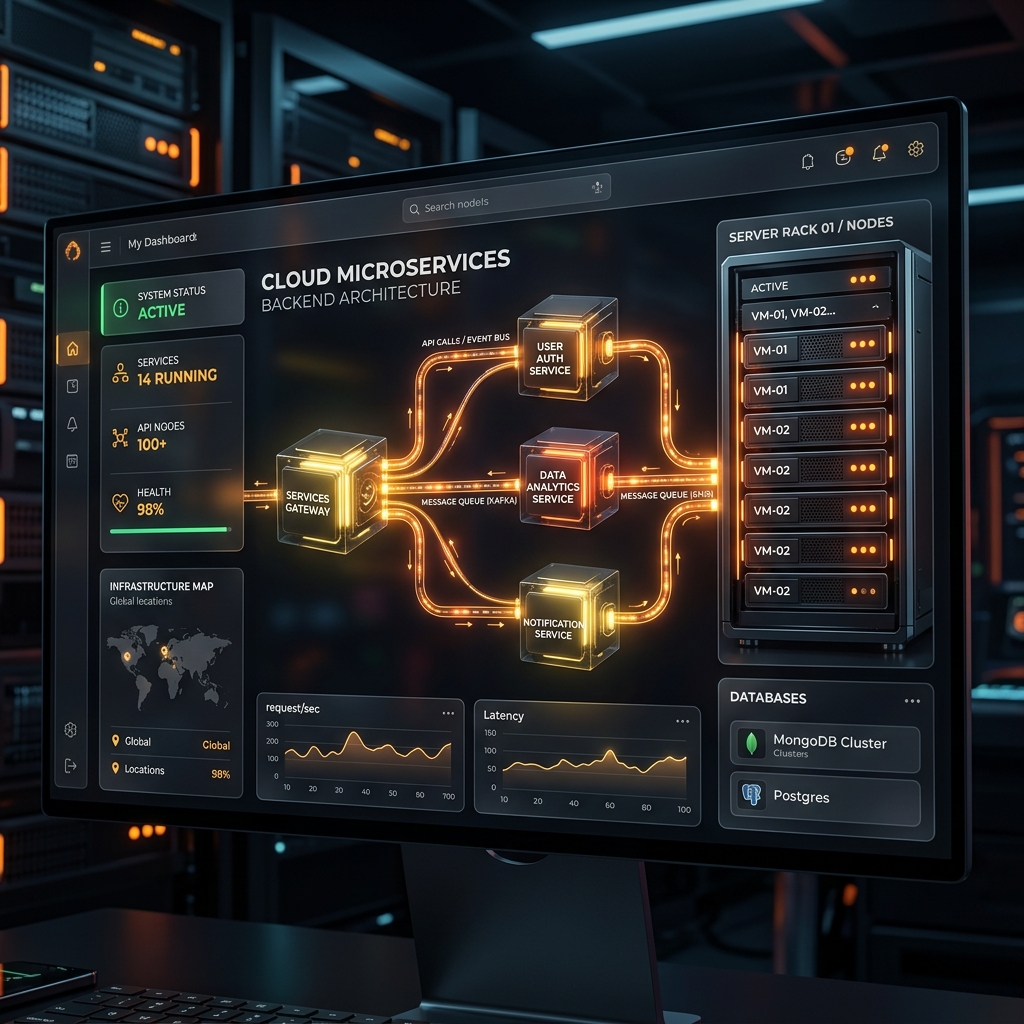
Executive Summary: Deep dive into tenant database isolation models, dynamic domain routing middleware, and row-level security for high-enterprise SaaS platforms.
Multi-tenancy is the foundational architecture pattern of modern SaaS platforms where a single deployed application serves multiple distinct organizational customers (tenants). Each tenant requires absolute data isolation, customized branding, and secure user management without risking cross-tenant data leakage.
When engineering a SaaS application, selecting the appropriate database isolation strategy determines long-term scalability, maintenance effort, and compliance security:
Single Database with Row-Level Isolation (Tenant ID): Every database table contains a tenant_id foreign key. While cost-effective and simple to back up, it relies heavily on application-level global scopes to prevent data leaks.
Database Per Tenant (Isolated Databases): Each tenant receives a dedicated MySQL/PostgreSQL database. This strategy offers maximum security, compliance (GDPR/HIPAA), and customizable tenant migrations.
Schema Per Tenant (PostgreSQL): Uses separate database schemas within a single Postgres instance, providing clean logical separation with lower overhead than dedicated database servers.
In Laravel, dynamic tenant resolution is typically handled in an HTTP middleware layer executed before controller action dispatching:
In enterprise SaaS systems like our Enterprise HRMS & Automated Payroll platform (https://hr.solidrix.com/), multi-tenancy ensures that biometric check-in data, payroll tax calculations, and employee salary records remain 100% isolated per client organization.
1. Always add composite indexes on (tenant_id, created_at) for high-frequency queries.
2. Use Redis caching tagged with tenant_{id} to prevent cross-tenant cache contamination.
3. Automate database migrations across all tenant databases using background queue workers during maintenance windows.
1. Database Isolation Models in Multi-Tenant Applications
When engineering a SaaS application, selecting the appropriate database isolation strategy determines long-term scalability, maintenance effort, and compliance security:
2. Implementing Dynamic Subdomain Resolution Middleware
In Laravel, dynamic tenant resolution is typically handled in an HTTP middleware layer executed before controller action dispatching:
namespace App\Http\Middleware;


use Closure;

use App\Models\Tenant;


class ResolveTenant

{

    public function handle($request, Closure $next)

    {

        $host = $request->getHost();

        $subdomain = explode('.', $host)[0];


        $tenant = Tenant::where('subdomain', $subdomain)->first();

        if (!$tenant) {

            abort(404, 'Tenant domain not configured.');

        }


        // Bind active tenant into Laravel Service Container & switch DB connection

        app()->instance('tenant', $tenant);

        config(['database.connections.tenant.database' => $tenant->db_name]);

        \DB::purge('tenant');

        \DB::reconnect('tenant');


        return $next($request);

    }

}
3. Automated Statutory Compliance & Tenant Isolation
In enterprise SaaS systems like our Enterprise HRMS & Automated Payroll platform (https://hr.solidrix.com/), multi-tenancy ensures that biometric check-in data, payroll tax calculations, and employee salary records remain 100% isolated per client organization.
4. Key Performance Recommendations
1. Always add composite indexes on (tenant_id, created_at) for high-frequency queries.
2. Use Redis caching tagged with tenant_{id} to prevent cross-tenant cache contamination.
3. Automate database migrations across all tenant databases using background queue workers during maintenance windows.